

About Europahaus Vienna
The property located at Linzer Straße 429, 1140 Vienna, along with all of its historic buildings, is owned by the Republic of Austria and is operated by the non-profit NGO ÖJAB as the “ÖJAB-Europahaus Dr. Bruno Buchwieser.” ÖJAB leases part of the complex to its subsidiary, Europahaus Wien GmbH, so that this company can use its expertise to support the social mission of the non-profit ÖJAB.
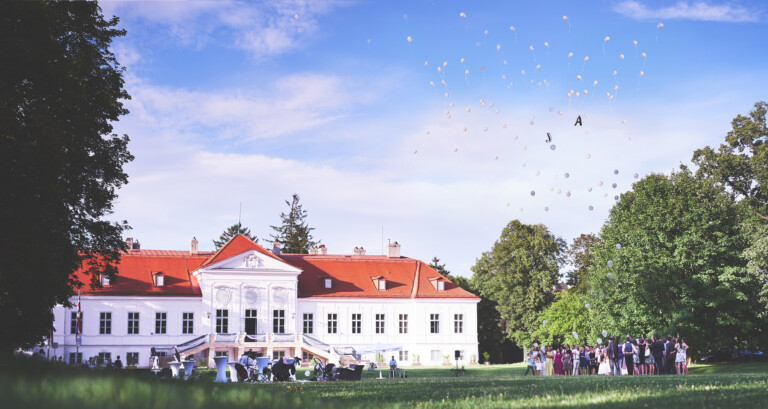
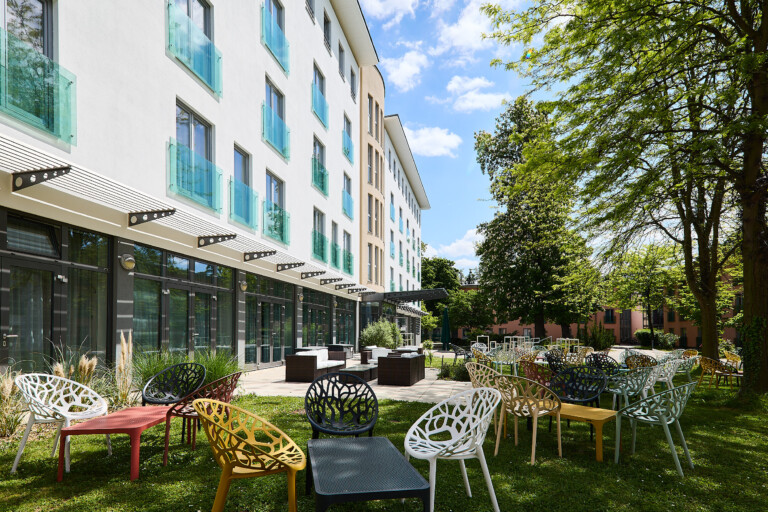
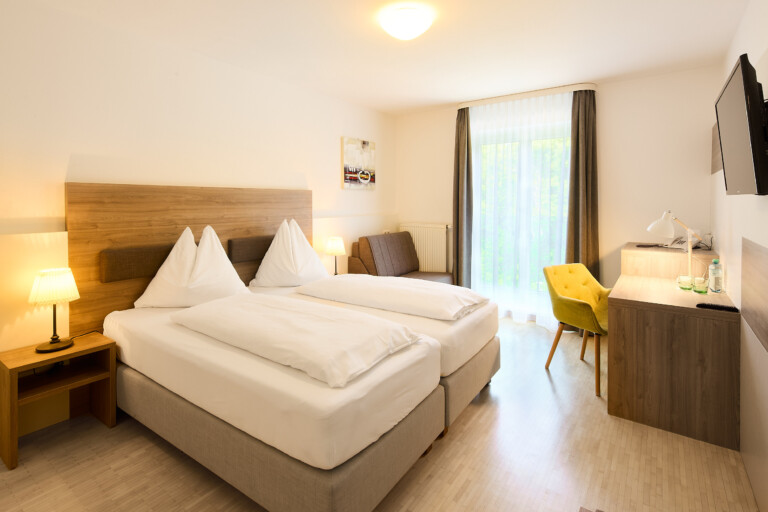
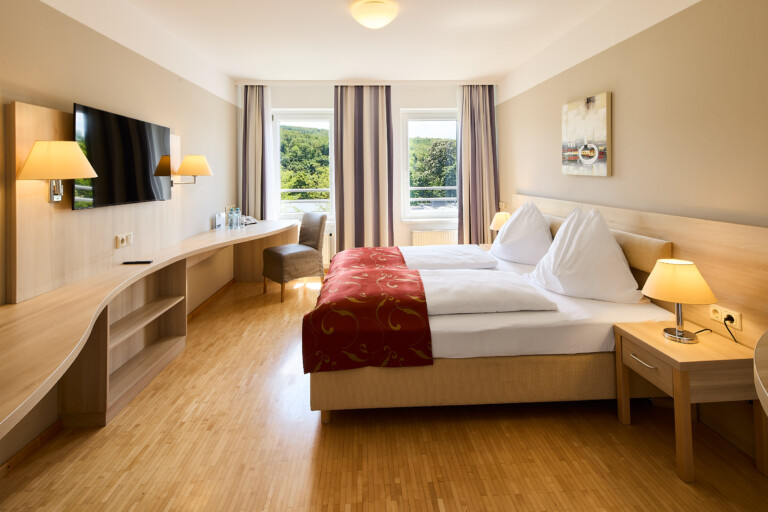
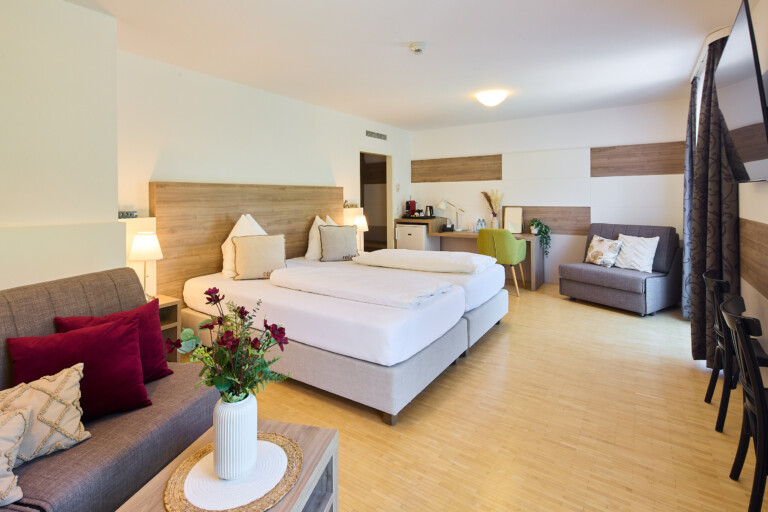
Europahaus Wien GmbH operates the hotel and conference center, the ORANGERIE, Miller-Aichholz Castle, and the Europahaus Restaurant, and also utilizes parts of the park grounds. In doing so, it brings decades of hospitality experience to bear and maintains the grounds as well as the historic tradition of the complex. In addition to sensitive maintenance, it simultaneously implements forward-looking innovations. The hotel rooms were renovated by April 2018. The ORANGERIE was renovated in 2017 and SCHLOSS Miller-Aichholz in 2022.
The partner ÖJAB (Austrian Young Workers’ Movement) is one of Austria’s largest non-profit housing organizations and offers 4,800 housing units for people of all ages. On another part of the grounds, ÖJAB operates the student residence “ÖJAB-Europahaus Dr. Bruno Buchwieser,” where young talents from Austria and all parts of the world live and learn together.
In addition, ÖJAB—which is politically and religiously independent—annually supports 1,400 predominantly socially disadvantaged young people and adults, as well as refugees, in their educational journeys, prepares them for the job market, and participates in European educational projects. In Burkina Faso, it carries out development cooperation projects. In Austria, ÖJAB employs 820 full-time staff members and over 200 volunteers at 43 locations.
The facility’s name honors the founder and long-time president of ÖJAB, Dr. Bruno Buchwieser (1919–1993). You can find more information about ÖJAB here: www.oejab.at
History of the Castle Complex
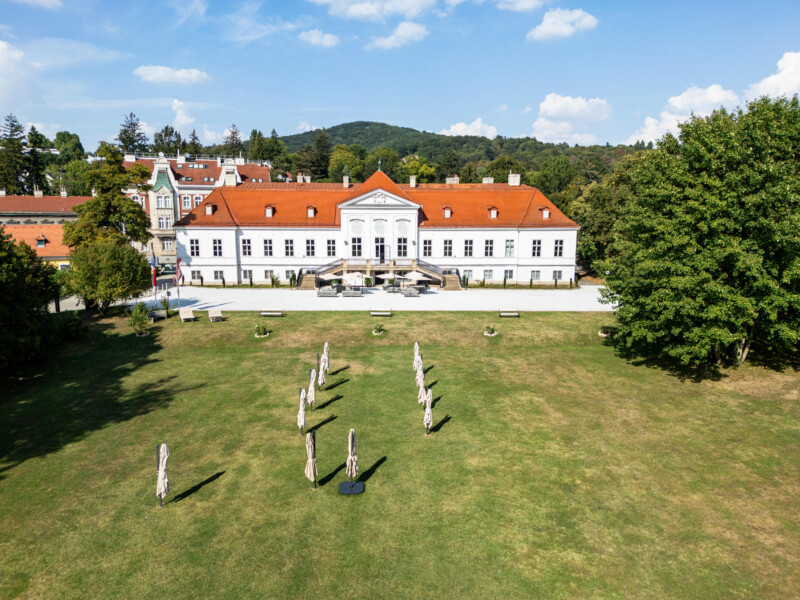
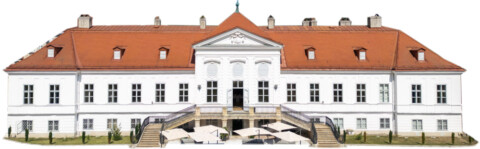
The history of the castle complex begins with Johann Georg von Grechtler, a man who made his fortune in the 18th century. Starting as a simple cart driver, he rose to become a military supplier and head of transportation and provisions for the Rhine Army, and around 1750, Empress Maria Theresa gifted him the estate that stood here. He had a hunting lodge built here based on plans by Johann Bernhard Fischer von Erlach.
Through Grechtler’s heirs, the castle complex came into the possession of a Princess Esterházy, née Princess Liechtenstein, whose coat of arms can still be seen today on the garden façade of the castle. After her death, the property passed into the hands of Counts Paul and Nicolaus Esterházy, for whom the small hunting lodge served as a summer residence for more than 100 years. The parts of the Vienna Woods hills (Wolfersberg and Bierhäuslberg) bordering the north of the castle were very attractive as hunting grounds. It was there that Archduke Franz Karl of Austria shot the last wolf of the Vienna Woods in 1846.
Finally, in 1894, it was acquired by Dr. Heinrich Ritter von Miller zu Aichholz, and remained in his family’s possession until 1938. A difficult period followed for the castle. Dr. Heinrich Miller-Aichholz sold it to the German police; the National Socialists turned it into a rest home for their officials. From 1945 to 1955, it housed a high commission of the French occupation forces. During this time, the frescoes inside were severely damaged and painted over.
After the conclusion of the State Treaty, the CASTLE became the property of the Republic of Austria, and the ÖJAB—the Austrian Young Workers’ Movement—used the complex as a boarding school for young workers. This saved it from destruction and decay.
Together with the Republic of Austria, the ÖJAB founded the Österreichische Europahausgesellschaft m.b.H. in 1956 and established the Europahaus Wien in the PALACE as a European educational center. It became a pilgrimage site for discussions on substantive issues completely removed from any party politics. Leopold Figl, Dr. Bruno Kreisky, and Dr. Rudolf Kirchschläger are among the many notable figures who were guests at the Europahaus.
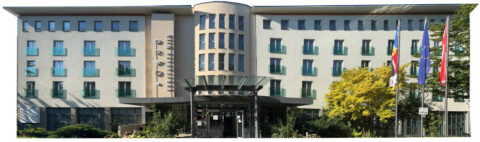
Later renamed the European Academy, the Europahaus Wien became a member of the International Federation of Europahäuser. At the same time, in the early 1960s, under the direction of the ÖJAB, new residential buildings were constructed in the SCHLOSSpark, which were operated as the “Europahaus Student Residence” until 1999. After the demolition of these residential buildings, the ÖJAB constructed five new buildings on the same site by 2001 and named the complex “ÖJAB-Europahaus Dr. Bruno Buchwieser.” One of the buildings is now used as a hotel by Europahaus Wien GmbH, while the others serve as student housing. Today, as in the past, the Europahaus Wien is both an international meeting place and an educational institution—a place steeped in history and, at the same time, a place of learning for the next generation.
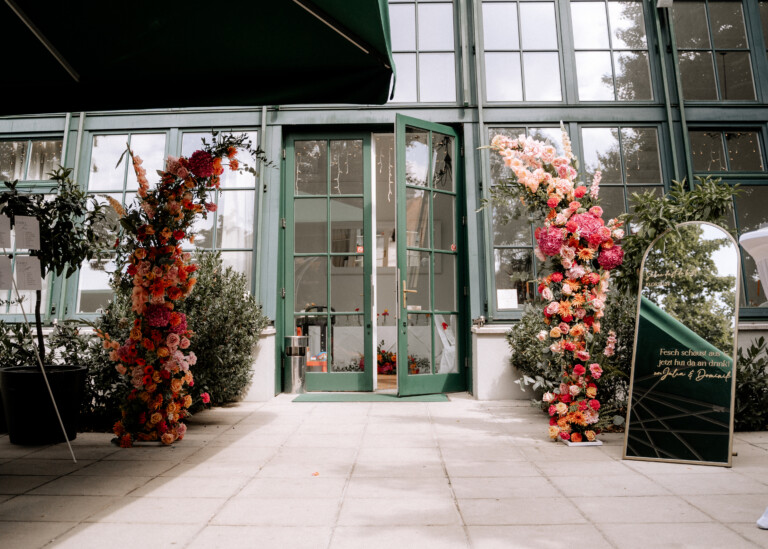
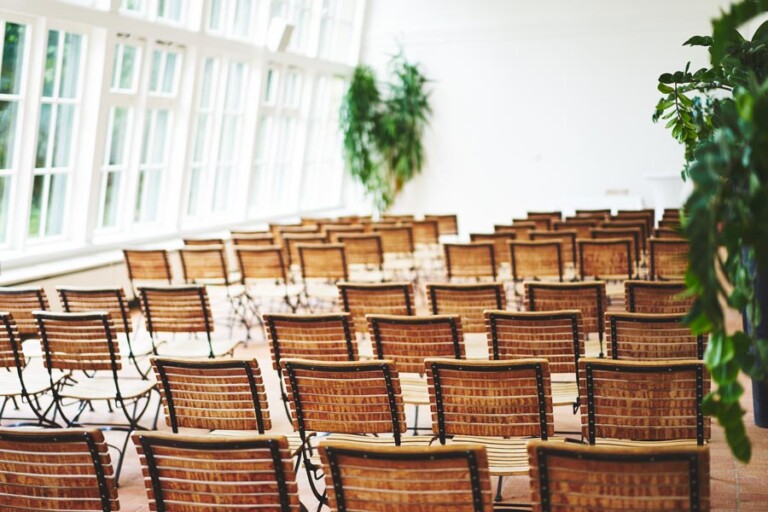
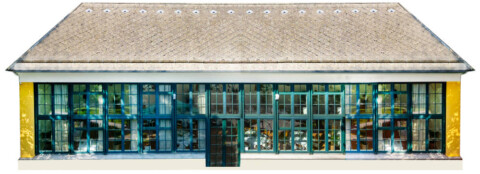
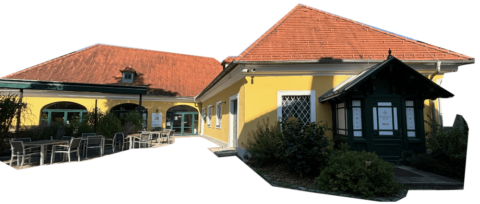
In the western part of the large park stands a single-story service building, today’s “RESTAURANT Europahaus.” The greenhouse, the ORANGERY, located along the perimeter wall, dates from the first half of the 18th century and is very well preserved. The well-maintained park features numerous old trees that have been designated natural monuments.
THE INTERIOR OF THE PALACE
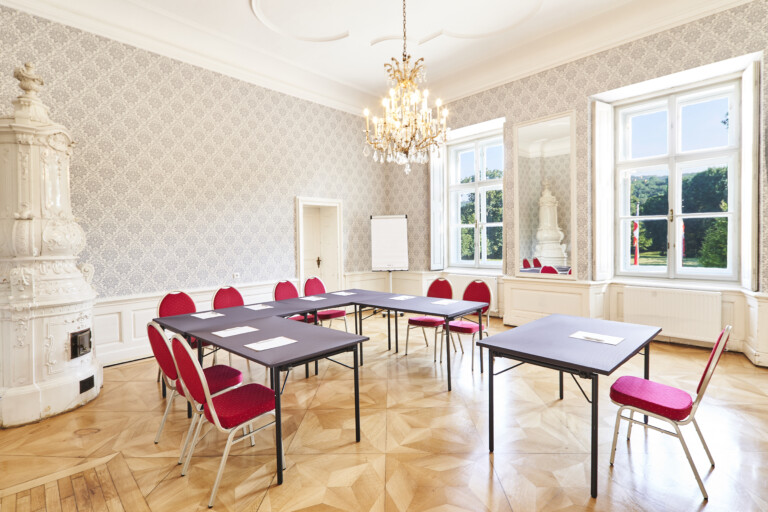
The tall main floor is divided by flat pilaster strips. A raised central risalit projects slightly forward. An open staircase (late 18th century) resting on sturdy pillars is situated in front of the ballroom located within. Oval bull’s-eye windows are arranged above its three large rectangular windows. The triangular pediment of the central risalit above is adorned with a coat-of-arms cartouche. On the ground floor, dining rooms are located on the south side, while kitchens and other ancillary rooms are situated on the north side. The upper floor houses the reception rooms facing the garden (Great Hall, Napoleon Hall, Prince Eugene Hall, Maria Theresa Room).
Several original tiled stoves with delicate rocaille decoration have been preserved here. Most of the former painting collection is also still present. The Great Hall is decorated with frescoes featuring hunting motifs and floral garlands.